
It may be 2023, but we still need to talk about the gender gap in STEM.

As we are approaching International Day of Women and Girls in Science we spoke to Dr Sarah Gallacher, Co-Founder and Engineering Lead at REACH Round 2 winner Urban Data Collective about what it is like for females working in STEM.

11 February marks the International Day of Women and Girls in Science, however attracting and keeping women in the field of science, technology, engineering and math seems to be a lingering issue. We are made to believe that the gender gap is closing, but sadly, the reality is somewhat different.

Females are largely underrepresented among founders, leading positions within companies and investors. Women constitute 51% of the total European population. The female employment rate has also increased to 67.3%, but only 34.4% of the self-employed are women and only 14.8% of start-up founders are female. To top that there is also a great bias that they face, when it comes to receiving financial support. In 2020 the global venture funding to female founders had dropped to a staggering 2.3%, compared to 2.8% in 2019.

“Unbelievably, the proportion of women to men in tech roles has declined over the past 35 years. And half of young women who go into tech drop out by the age of 35”, a study led by Accenture and Girls who Code states. In spite of all the efforts that are being made to reduce the gender gap, 1984 saw more female tech workers than today

The pandemic made it even worse for females across all sectors, since they seem to have been even more negatively affected than their colleagues, for example as a result of the unbalanced distribution of unpaid care and domestic tasks. All too often, women take charge of homeschooling, elderly care, and other work created by stay-at-home orders, at the expense of their own employment. Gender stereotypes and gender-based inequalities continue to prevent many girls and women from taking up and remaining in careers in science across the world (UN Women).

To take a look into two of the sectors specifically, “there is a troubling and persistent absence of women employed in the Artificial Intelligence (AI) and data science fields. Over three-quarters of professionals in these fields globally are male (78%); less than a quarter are women (22%) (World Economic Forum, 2018). In the UK, this drops to 20% women”, the “Where are the women? Mapping the gender job gap in AI” Policy Briefing from The Alan Turing Institute reports. The Institute, which was founded in 2015 is the United Kingdom’s national institute for data science and artificial intelligence, and is largely funded by the UK government. The institute does research, which tackles some of the biggest challenges in science, society and the economy. The goal of this research is to build a data and AI enriched world for the benefit of all.

The abovementioned report is from 2021, at the height of the COVID-19 pandemic, but even now in the beginning of 2023 the issue seems to be highly relevant since little to no progress has been made in order to close the gender gap in the technology industry. “Addressing the gender job gap in AI is the first step to ensuring that our technology works for all of society”, the Institute says.

The report has identified some possible solutions to closing the gap, with active measures being at the heart of their proposal, such as:

  • Tech companies must improve the level of reporting regarding diversity and inclusion and have more in-depth analysis of diversity data, instead of only gathering headline statistics.
  • Governments should require tech companies to scrutinize and disclose the gender composition of their technical, design, management and applied research teams.
  • Countries need to be proactive and promote the inclusion of women and marginalized groups in the design and development of machine learning and AI technologies.
  • It should be the companies’ responsibility to implement gender inclusive labour market policies, such as paid maternity and parental leave and flexible working hours and affordable childcare must be provided.
  • Intersectional gender mainstreaming should be implemented by tech companies in human resources policy so that women and men are given equal access to well-paid jobs and careers.

We also identify the need for more structural assistance in terms of specific programs aimed at supporting female entrepreneurs and startups.

To this end, there are some EU funded programs that serve this purpose. REACH Incubator, for example, is a EU funded program that aims to facilitate corporate and startup data-based collaborations via its 11-month digital and physical program. The program has built on the successful efforts of European Data Incubator, which has notably supported Laura Murphy in her development of Amplify Analytics. REACH has been up and running for 2 years now, and has also supported several female entrepreneurs in their data driven endeavors, Harriett Smith from CyStellar, and Dr Sarah Gallacher from Urban Data Collective to name a few.

In order to diminish the gender gap, the programme is transparent about the changes in the gender balance within its incubated startups, reporting on it on a regular basis. The surveyed Round 1 startups reported a change of 30% in the gender balance of their teams after the completion of the programme, while this percentage for the Round 2 startups grew to 60%. Attracting female entrepreneurs to the programme and promoting gender diversity within our incubated teams is something that REACH really strives for.

Dr Sarah Gallacher is Co-Founder and Engineering Lead at REACH Round 2 winner Urban Data Collective, a company based in London, UK. She is a great example of a woman at the forefront of a predominantly male-led ecosystem. Sarah was very excited to speak to us about her journey in STEM, the challenges she has faced throughout the years and what it is like being a female leader.
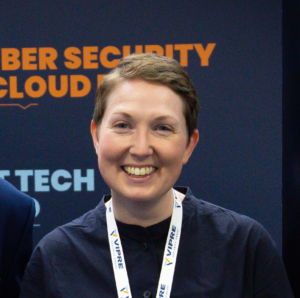
Dr Sarah Gallacher

Co-Founder and Engineering Lead
Urban Data Collective

Hi Sarah! It’s such a pleasure to speak with you, thank you for taking the time to talk to us about the lack of diversity in STEM! We wanted to kick off this interview with you telling us a little bit more about your journey in STEM. How did you get started and what made you think “This is it, this is the path I’d like to pursue”?

I enjoyed all kinds of subjects at school and didn’t think too much about career at any point. It was always about what I enjoyed most, and I ended up studying a broad spectrum of subjects. For example, we had a piano at home which I loved playing and I studied music for many years, but I also remember when my family got our first home computer and becoming a bit obsessed with it. I didn’t want to go to school, instead I wanted to stay home and play on the computer.

I was very lucky at that age that no one tried to discourage me from any subjects or encourage me towards certain others. I never felt that I shouldn’t or couldn’t do something. Instead, I felt free to do what appealed to me most and Computer Science became that subject. It was the ideal blend of problem solving, engineering, and creativity and was a space where I could build new things and push boundaries.

I went on to study Computer Science and Software Engineering at University and did a PhD in Machine Learning. Since then, I have worked in both academic and industrial research, and more recently moved towards the commercial world.

What I have always loved about technology is the broad spectrum of disciplines and the opportunities to diversify. Even now, my career continues to be driven by what I enjoy doing and is evolving rather than following a defined plan.

Have you ever had any doubts or faced any challenges that made you consider quitting?

Luckily, I have never faced any situations so severe, however there are always frustrations. Typically, they are small things, like being one of only a few females at large technical events, or consistently being the only female around the meeting room table. Sometimes it’s being singled out in a room full of male colleagues – like being individually apologised to because someone swore. Sometimes it’s being patronised or underestimated by someone who assumes you aren’t technical, or the quick flash or surprise/skepticism across someone’s face when I state that I’m the Engineering Lead for my company.

Thankfully, these things are not enough to divert me from doing what I love and throughout my career I have been so fortunate to work with many inspiring, supportive women and men who have helped me progress.

You founded Urban Data Collective with Alex Gluhak in 2021, around the height of the COVID-19 pandemic, one of the most turbulent times during which people were losing their jobs and facing uncertainty. How did you take the leap?

Running a startup is something that I have thought about many times, but it is a huge step, and the risks were always too high. However, with Urban Data Collective, Alex had successfully secured pre-seed funding and support from our parent company, so the risks and hurdles felt more manageable. Alex and I have also known each other for quite a few years and trusted each other to deliver what was required.

Urban Data Collective is now at its second birthday, and I have no regrets in making the leap. Of course, there have been ups and downs, as there are with any startup but we have come through and learned so much in the process.

You are still one of the few female leads in your field. How does that make you feel?

It’s disappointing. There is no good reason why there are much fewer of us. However, I have had the opportunity to work with some amazing female leaders and always reflect on what I have learned from them and how they continue to drive and shape their fields. It only takes one or two such experiences to have a big impact on your life and career, when you feel you have found your champion.

What improvements do you think could be made by governments and companies to attract more female talent and promote female leadership in the context of STEM?


Any improvements or interventions should happen as early as possible, ideally in primary schools and then continue throughout all stages of education. It’s important to remove all references to STEM subjects as being more masculine and instead promote neutrality and inclusiveness.

A big part of that is seeing role models that you, as a young person, can relate to. For example, I had some great maths, science and technology teachers who were female and who reinforced an unconscious belief in me that these subjects were open to me with no stereotypes or stigma.

Role models are equally necessary at career level and given the relatively low numbers of females in senior positions it is important for companies to have a strategy towards balance at every level of their hierarchy. It’s not easy and it may take some time, but this needs to be part of regular discussion and review.

Did you feel supported throughout the REACH programme and what do you think EU-funded programs can do to attract more female founders?

I really enjoyed the REACH programme and although there was an obvious gender imbalance I met some amazing women from other startups in the process. Thinking about how future EU funded programmes could attract more female founders, perhaps there could be more dedicated outreach and promotion to female founder groups and other accelerators dedicated to female founders.

Let’s close the gender gap in STEM together!
REACH Incubator is currently running its final Open Call for startups.

Follow REACH on social media:

CONNECT5 – DIH for Connectivity, CPS, IoT, Cloud/Edge and Data Analytics is a national and European DIH supporting the digital and green transformation of SMEs and public organizations. CONNECT5 is a collaborative network, in the form of a Consortium of 12 entities (RTO, polytechnic institutes, universities), with high level of expertise in digital technologies, state-of-the-art infrastructures and a deep nation-wide network of contacts (companies, business associations, public entities, etc.) bringing together their complementary expertise and assets, to create a unique value platform. 

The DIH TERA consortium consists of organisations based in East Croatia, among which there are constituents of the two East Croatian universities and development agencies from all five of the region’s counties, as well as business support institutions and renowned Croatian SMEs with extensive knowledge and experience in the IT sector and digitalisation processes. The coordinator is an SME with a not-for-profit clause, established by the Josip Juraj Strossmayer University of Osijek, Osijek-Baranja County and the City of Osijek.

4PDIH provides, connects and support knowledge, business and technology expertise, technologies, experimental and pilot environments, best practices, methodologies and other activities necessary to fully enable the Slovenian industry, public administration and communities in building digital competencies, innovation models and processes, and to support their digital transformation. The aim of 4PDIH is to foster awareness and provide services to grow digital competencies, share digital experience and case studies locally, regionally and internationally, and support the government to adapt regulation and open its data to foster entrepreneurship.

RTU ITI Digital Innovation Hub focuses on solving complex digitalization problems and knowledge and technology transfer to businesses and society. It specializes in enterprise integration, development of scalable cloud solutions for big data processing, data mining and machine learning including applications in cybersecurity, IoT, intelligent transportation systems and biotechnology, modelling and optimization of complex systems, development of digital twins as well as digital transformation of organization by using advanced information technologies.

CERR is Digital Innovation Hub Emilia-Romagna, one of the 22 Italian DIH, funded by Confindustria Emilia-Romagna and the other major industry associations of Emilia-Romagna Region, and is part of the EDIH recognized by the UE. CERR is a Business Innovation and Technology Transfer Center recognized by the Emilia-Romagna regional government, a node of the High Technology Network, acting as a link between companies, researchers and institutions. CERR is also part of a wider innovation ecosystems of Public-Private Partnerships.

The CERTH/ITI nZEB Smart House is a rapid prototyping & novel technologies demonstration infrastructure resembling a real domestic building where occupants can experience actual living scenarios while exploring various innovating smart IoT-based technologies with provided Energy, Health, Big Data, Robotics and Artificial Intelligence (AI) services. As the first Smart near-Zero Energy Building in Greece, it combines enhanced construction materials and intelligent ICT solutions creating a future-proof, sustainable and active testing, validating and evaluating ecosystem.

DIGIHALL is a DIH specialised in artificial intelligence, cybersecurity and cyber-physical systems. It was launched in March 2017 with strong support of the region Île-de-France, which will invest €300 million over 5 years within their smart regional strategy. DIGIHALL is led by a Research and Technology Organisation (CEA LIST) and an industry cluster (SYSTEMATIC), who federate different actors spanning from academia and education providers, to venture capital, incubators and testbeds. The DIH offers services such as testing facilities, digital maturity assessment, training on digital skills, and access to customers and finance. The aim is to accelerate technology adoption and knowledge transfer to industrial actors.

Data Cycle Hub is the Reference Digital Innovation Hub in the Valencia Region to promote data, artificial intelligence and cybersecurity based innovation. The objective is to close the gap between research and the industry, specifically SMEs, as well as the Public Administration, providing innovative solutions and services to make the best decisions regarding technological investments. It is an ecosystem composed of all the relevant agents and part of the AI Digital Innovation Hubs Network. All the technologies covered by the DIH are around DATA, covering from Data Gathering to Visualization. In this sense, the DIH addresses Primarily Big Data and Artificial Intelligence, but also other key digital enabling technologies like Cyber Physical Systems, IoT, Cloud and High Performance Computing Platforms or Statistics Optimization. The DIH was one of the 5 finalists to the DIHNET DIH Champions Challenge 2019.

INVAT·TUR (Institute of Tourism Technologies of Region of the Valencia), is a center conceived as a meeting platform for all agents in the tourism sector and represents one of the main axes in improving the competitiveness and sustainability of the tourism model of the Region of the Valencia. The goals are to develop lines of action in R+D+i adapted to the needs of the tourism sector, as well as transfer knowledge to tourism companies and organizations, giving the tourism sector access to the most advanced knowledge, services and technologies.

SMAT (Società Metropolitana Acque Torino S.p.A.) is the water utility managing the integrated water supply and wastewater service in the whole Metropolitan City of Turin (in the Piedmont region, north-west of Italy), for more than 2.2 million inhabitants from almost 300 municipalities. These include Turin urban area, which accounts for about half of the total population served. SMAT Group is a leader in the field of integrated water services and operates in the areas of engineering, construction and management of diversified water sources, state-of-the-art drinking water treatment systems, drainage systems and recycling of urban wastewater, collection, purification and recycling networks, energy cogeneration and recovery systems. 

Since 2008, SMAT has strongly engaged in research activities, with the inauguration of the Research Centre counting 7 full-time researchers and about 50 operators with a variety of competences including engineering, chemistry, physics, biology and biotechnology and has a fully equipped laboratory. Currently, SMAT Research Centre is involved in about 20 projects (two EU-funded Horizon 2020 projects).

The Bilbao City Council is the municipal executive body of Bilbao, which is directly elected by the citizens. The main competencies of the Bilbao City Council’s security area are public safety and civil protection, including the management and planning of the city’s fire brigade.

Grupo AN is a centenary cooperative and a leader in the Spanish agri-food sector. They are a second-degree cooperative formed by 160 agricultural cooperatives and 40,000 farmers and livestock owners. Grupo AN is the largest producer of cereal in Spain and is also highly active on national and international wheat, barley, corn, rape and sunflower markets. They are mainly producers of agricultural products, including fruits and vegetables of worldwide commercial interest.

Cofares is the leading pharmaceutical wholesaler in Spain. It is a cooperative with 100 % pharmaceutical capital that provides pharmacies with products as well as health-related services.

EDP is a multinational, vertically integrated utility company. Throughout over 40 years of history, they have been building a relevant presence in the world energy scene, being present in 29 countries, on 4 continents.
With more than 12.100 employees, they are present throughout the electricity value chain and in the gas commercialization activity. They are the fourth-largest wind energy production company in the world and 74% of their energy is produced from renewable resources. They provide electricity and gas to more than 9 million customers.

Biscay (NUTS3) is a one of the three provinces of the Basque Country, in the north of Spain with Bilbao, its capital, as the business, social and cultural center. The provincial executive body is the Government of Biscay (Diputación Foral de Bizkaia), which is directly elected by citizens. Core competences of the Government of Biscay are full taxation power, complete development of Social Services and Economic Promotion, among others, such as culture promotion, transport, infrastructure promotion, agriculture and environment, within the wide level of autonomy of the Basque Country. The Department of Social Action will participate in this project. The Department’s main function is to provide service to all those in Biscay who, due to a personal, family or social situation, have difficulties in leading a dignified and full life.

Idea75 is a SME that aims at providing innovative solutions for process optimization and energy efficiency of industrial plants following the new guidelines of Industry 4.0 and ISO 50001. The company has gained skills and experience in design and implementation of system automation, monitoring and supervision of production lines and automatic control systems. Idea75’s smart manufacturing solutions help our customers to significantly improve their operations by leveraging the data provided by related devices, people and processes (e.g. development of descriptive, predictive and prescriptive analytical models for Business Intelligence applied to energy efficiency and predictive maintenance of industrial machinery).

Sonae is a leader in the Portuguese retail market (food and non-food). Established in 1959, grew and strengthened its core business during 1980’s and 1990’s and achieved a turnover of more than 6 Bn € in 2018. Innovation in products and services has been the main tool to increase the company’s competitiveness. Sonae holds other businesses and interests such as retail properties, and core partnerships, such as shopping centres and telecommunications (one of Portugal’s biggest Telco companies).

Almerys is specialized in collecting, storing and processing sensitive data. Almerys ambitions are to become the global digital trust leader over the coming 10 years. Almerys provides products and services in digital trust, sovereignty and privacy-by-design, ranging from tier 4+ level data centers , to identities management, electronic signature, dynamic consent management, transactional payments, legal and probative archival of sensitive data, as well as personalized services brokering.

Play&go experience is a tool to create customized apps that improves the visitor’s experience, based on gamification, geolocation and augmented reality. With geolocated data we provide the visitor information of interest getting more interaction, fun and immersion, in mixed reality

VRT is the public broadcaster of the Flemish Community in Belgium. Its mission is to inform, inspire and unite and so reinforce Flemish society. As a service providing organization, the VRT wants to take up a special position in society. The VRT strives for a large audience, not so much to gain a high market share, but because it wants to be relevant to as many Flemish people as possible. This is the most important charter of the public broadcaster, i.e. reinforcing democracy and society by contributing to a social and pluralistic debate, documenting society and stimulating culture and language and Flemish society in all its diversity.

Yapı Kredi Teknoloji is a technology company established in 2015 to deliver innovative and patentable products and solutions with high added value. We develop innovative and R&D oriented comprehensive software projects, especially for the banking and finance sector. For the solutions and products, we mostly employ artificial intelligence, machine learning, natural language processing, data mining. WIth several AI projects deployed so far, Yapi Kredi Teknoloji has always been a leader ideas in the era of bank operation models. We focus on the functions/applications/systems that better translate AI results to the customers. Among all AI applications better results come out of customer centric solutions. We put ourselves in the customers’ place and focus on AI at key dialogue points.

Migros Ticaret A.Ş. was founded in 1954 in İstanbul through the joint initiatives of the Swiss Migros Cooperatives Union and the İstanbul Municipality. Embracing the mission of procuring food supplies and consumables from producers under the supervision of the municipal authorities and of serving these products to İstanbul inhabitants in hygienic conditions and at economic prices. Migros opened its first store in Istanbul in 1957. Today, Migros offers spacious stores in a wide range of formats and locations whose vast selection of stationer, glass and kitchenware, appliance, book, recorded media, clothing and other necessities give it the ability to satisfy nearly all of the shopping needs of its customers.

JOT Internet Media España is one of the world’s leading platforms for High Quality Audience Acquisition for Global Digital Players. It was created in October 2004 and operates internationally in brokering high volumes of multichannel internet traffic which includes search engine queries (Search), social networks media (Social) and advertising space (Display). JOT is one of the three largest worldwide players in internet traffic brokerage. The company operation is supported by large technology partners such as Google, Bing/Yahoo, Ask.com, Web.de, CBS. JOT is a multinational digital company that generates large amounts of qualified and high quality2 traffic in Search, Social and Display.

Systematic Paris-Region innovation and technology cluster brings together and promotes an ecosystem of excellence in Deep Tech (Cyber & Security; Data Science & AI; Digital Engineering; Digital Infrastructure & IoT; Open Source; Optics & Photonics) with 900 members. Systematic connects stakeholders and boosts digital projects through collaborative innovation, SME development, business sourcing, across a range of strategic sectors: energy, telecoms, healthcare, transport, information systems, factory of the future, digital city and security. The cluster promotes its members, region and innovation projects, with the aim of raising their profile and enhancing the attractiveness of the Paris- Region area and ecosystem.

The Centre for Research and Technology Hellas is one of the largest research centres in Greece; top 1 in north Greece. It was founded in 2000 and is located in Thessaloniki. Its mission is to promote the triplet Research – Development – Innovation by conducting high quality research and developing innovative products and services while building strong partnerships with industry and strategic collaborations with academia and other research and technology organisations in Greece and abroad.

EstBAN is an organization for business angels and business angel groups seeking investment opportunities in Estonia and its neighbouring regions with an aim to grow the quantity and quality of local seed stage investments. In 2014, EstBAN was awarded “The Best Newcomer in Europe” by European Business Angels network and in 2018 received an award for the Best Early Stage Ecosystem and performing EBAN member. As of 2019, EstBAN has 150+ members that invested a total of €7 million EUR during 2018. EstBAN’s main aim is to increase the amount of angel investments in Estonian startup ecosystem, support and train angel investors to become more knowledgeable, improve the deal flow quality and raise the number of angel investors in EstBAN.

Gnúbila is a data privacy solution designer and independent software vendor. GNúbila provides solutions to extract, de-identify, demilitarise and share medical sensitive data cross-enterprise and transnationally. Actively supporting European and international consortia since a decade, Gnúbila justifies a rich experience in the field of biomedical research and e-health big data platforms developments. Its goal is to offer state-of-the- art anonymisation techniques to process all possible medical information and make it shareable in big data scenarios. Gnúbila enforces privacy and informational self-determination by design.

F6S is a leading global founder and startup network that helps public sector entities around the world to promote, communicate and disseminate technical and research projects. F6S stands for F-ounder-S. Our mission is to help founders and startups grow to solve the world’s pressing social, economic, environmental, sustainability and innovation problems. In addition to F6S’ work with governmental entities, we also work with corporates, investors, research institutions, programs, universities and others in the global startup ecosystem. F6S tools deliver company growth through grants, partnerships, funding, investment, pilot contracts, partnerships, jobs & talent recruitment and company services.

Bright Pixel is a company builder studio, working on the assumption that putting together industry partners, technology, incubation and investment contributes to launching better and more robust tech-based companies and products into the market. Bright Pixel’s business model has two lines of action with synergies with each other: Incubation & investment: with a strong tech-based team, with vast experience in launching IT products/services, Bright Pixel is uniquely positioned to support start-ups being able to provide mentoring and support to start-ups both on tech and business topics. Bright Pixel incubates and invests in start-ups as well as launches own spinoffs.

ZABALA is a Spanish SME (over 200 employees) that has a wide experience in supporting entities in the management of their RTD and innovation activities, as well as in technology transfer projects and initiatives. It is a consolidated RTD and Innovation consultancy firm working across Europe on these fields since 1986. It currently provides, on a contract basis, consultancy services related to RTD and innovation management to a portfolio of 600 organisations (including SMEs, big companies, RTD centres, universities and public organizations).

Instituto Tecnológico de Informática is a Spanish Research & Technology centre specialised in ICT, established in 1994 and located in Valencia, Spain. ITI research and innovation activity is developed by a team of 200 highly-skilled people, focused on 6 key digital enablers around the Data Cycle: Cyber connectivity, Cyber-Physical Systems, Computing Infrastructures & Platforms, Big Data Analytics, Optimization Technologies, and Artificial Intelligence. All this knowledge and experience is brought to the industrial and public sector through a range of services: Access to infrastructure and technology platforms, Access to specialist expertise on digitisation & applications, Collaborative research for Industry needs, Demonstration of best practices, Training and Education, Showcase technologies in pilot factories, and Support experimentation in real-life environments.

The University of Deusto, recently recognized as an International Excellence Campus, was founded in 1886 and comprises 6 Faculties: Psychology and Education, Human and Social Sciences, Engineering, Law, Business and Economic Sciences and Theology. The MORElab – ICT for Good — research group is one of the largest and most successful research groups in the University and belongs to the Internet unit within DeustoTech – Deusto Institute of Technology, affiliated to the Faculty of Engineering of the University of Deusto. The group has a strong background in the application of Artificial Intelligence techniques to middleware for embedded and mobile systems in order to foster context-aware reactivity. In addition, the group is currently focusing its research on the area of Smart Cities by leveraging its expertise on Ubiquitous Computing, Social Computing, Linked Open Data management and recommendation and social data mining (Big Data Analytics) to extract structured data from social networks and thus enable urban apps assisting the daily activities of citizens or visitors.

Commissariat à l’Energie Atomique et aux Énergies Alternatives is a French Research and Technology Organisation established in October 1945. The CEA LIST research institute focuses on the development of software and hardware technology for highly integrated complex systems. Its R&D programs, all based on major economic and social implications focuses, deal with advanced manufacturing, embedded systems, ambient intelligence, and health applications. It has a long experience of European funded projects but also in technology transfer to industry and SMEs.